Unlocking historical mine records with automated image processing
STFC Hartree Centre worked with the Mining Remediation Authority (MRA) to develop bespoke image processing software to transform a labour-intensive manual process into a rapid, automated digital workflow through the Hartree National Centre for Digital Innovation.
Challenge
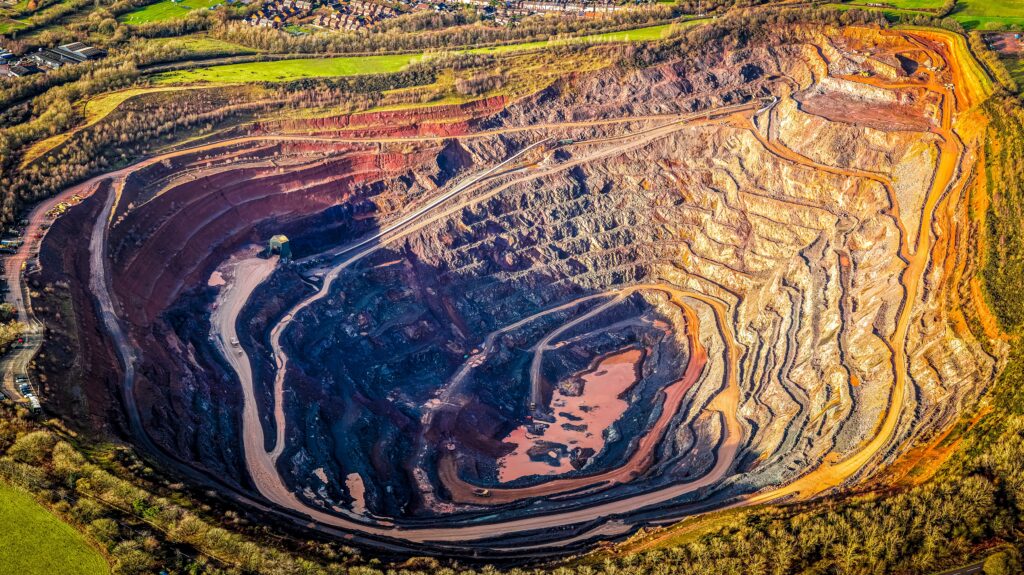
Across Great Britain, the legacy of former coal mining presents both a public safety challenge and a low-carbon opportunity. The risks associated with the ageing underground workings need to be managed, while maximising opportunities, such as taking advantage of mine water heat, which could contribute to net zero and deliver wider community benefit. Achieving these outcomes depends on authoritative, accessible information on the location and extent of historic workings. Much of what we know about Britain’s mining legacy is held within the Mining Remediation Authority national archive of more than 120,000 historic mine plans. While these have been scanned, turning them into usable digital data is still a specialist, mostly manual task that can take several hours per plan, limiting how much can be processed.
Approach
We worked closely with MRA domain experts to develop custom image processing software tailored to the specific characteristics of historical mine plans. The tool compensates for the age and degradation of scanned images, then distinguishes different classes of linework and annotation. Building on this preprocessing, the software automatically digitises all lines and extracts all text from each image, saving the outputs in standard digital formats. These structured outputs allow the MRA to search, visualise, and analyse the full content of any plan without manual intervention. Crucially, the workflow can be applied uniformly across the entire archive, processing plans at scale and at a fraction of the time required by manual methods, with a typical run time of a few minutes per image, compared to hours of expert effort.
Benefits
By automating the digitisation of mine plans, MRA specialists are freed to focus on the high-value interpretive work, rather than spending hours on manual tracing. The quality of the automatically generated outputs is comparable to those produced by hand, but delivered considerably faster. What used to take 1 day is completed in under 12 minutes. The broader societal benefit is significant. By accelerating the conversion of historic mining records into usable digital information, this approach enables the MRA to make better use of its expertise, supporting the assessment and development of more mine water heat opportunities, helping to deliver net zero ambitions, and improving understanding of former mine workings to keep people safe and enable sustainable growth.
“ Our mine plans provide a unique record of the ground beneath a quarter of Britain. By working with the Hartree Centre, we’re combining the latest technology with centuries of mining knowledge to unlock information faster, helping us and others make better decisions for communities, infrastructure and the environment”
Geraldine Wildman, Digital & Information Director at the Mining Remediation Authority
Join Newsletter
Provide your details to receive regular updates from the STFC Hartree Centre.