Supporting sustainable textile production with data science
STFC Hartree Centre worked with Fibe through the Industry Impact Fund, Innovate UK’s BridgeAI and Analysis for Innovators funding to improve the process of turning potato harvest waste into industry ready textiles through more efficient and accurate evaluation of fibre extraction.
Challenge
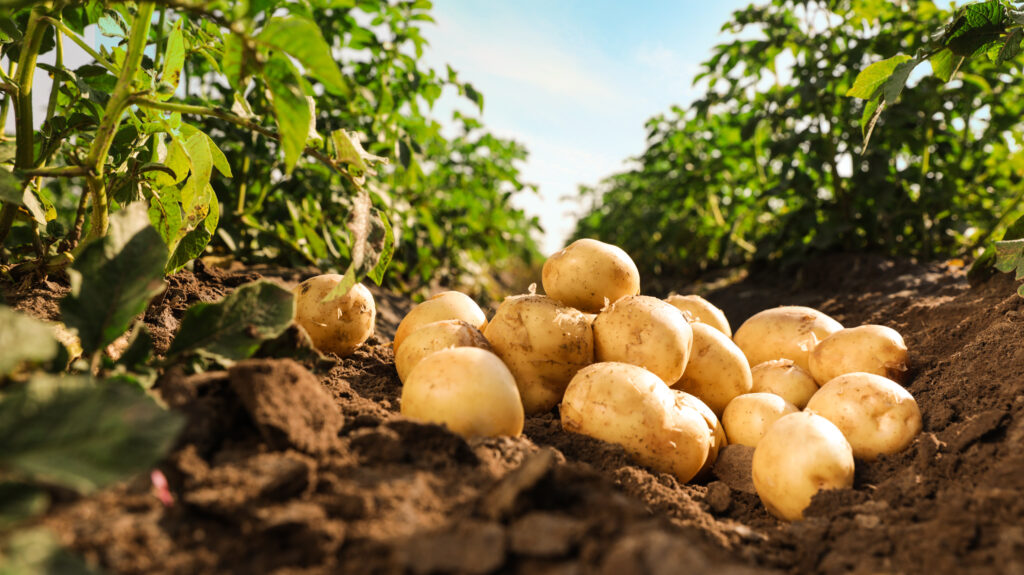
The unsustainable production of textiles for industries such as fast fashion is contributing massively to the climate crisis, so what can we do to address this? By looking at byproducts and waste produced by different sectors such as agriculture, we could discover new purposes for them and recycle them into something new. This is exactly what’s happening at Fibe, an organisation that’s creating textiles and clothing through potato harvest waste. Fibe takes the fibrous stalks typically discarded or left to rot in fields and uses them to create natural fibres for textile production with a much lower environmental impact than typical textile crops. However, only certain parts of the stalk can be used in this process. Fibe wanted to make sure they were able to recycle as much material as possible, so needed to clearly understand how successful their fibre extraction processes were.
Approach
We worked with Fibe to support their sustainability efforts by using data science to understand potential fibre yields from different stems more efficiently and accurately. During the fibre extraction process, there was varying levels of successful extraction, but it was difficult to clarify how successful it was visually, since visual interpretation is subjective. To address this, we developed a computer vision model that can assess the processed stems. The model is capable of identifying how much potential fibre material remains within a sample and its properties, such as location within the sample and the size of a single fibre.
Benefits
Fibe is now one step closer to their vision of bringing more sustainable textiles to the UK, benefitting farmers, consumers and moving us closer to our net zero goals. Through this work Fibe is better positioned to evaluate their material processing and make improvements as the new process is faster, saving colleague time and organisational finances which can now be redirected into developing the organisation further. The benefit of using potato harvest waste over traditional textile crops such as cotton is clear, as it doesn’t require extra land or water. With further development of this technology, this could become a robust alternative for textile production in the UK as additional suitable byproducts could be identified, helping the UK to become a more sustainable location for the textiles industry.
“ With this tool we can verify yield and other fibre properties of any plant based stem, allowing us to potentially bring a whole new fibre to the market.”
Hazel Gonda, Fibe
Join Newsletter
Provide your details to receive regular updates from the STFC Hartree Centre.