Turbocharging plasma containment design with AI and machine learning
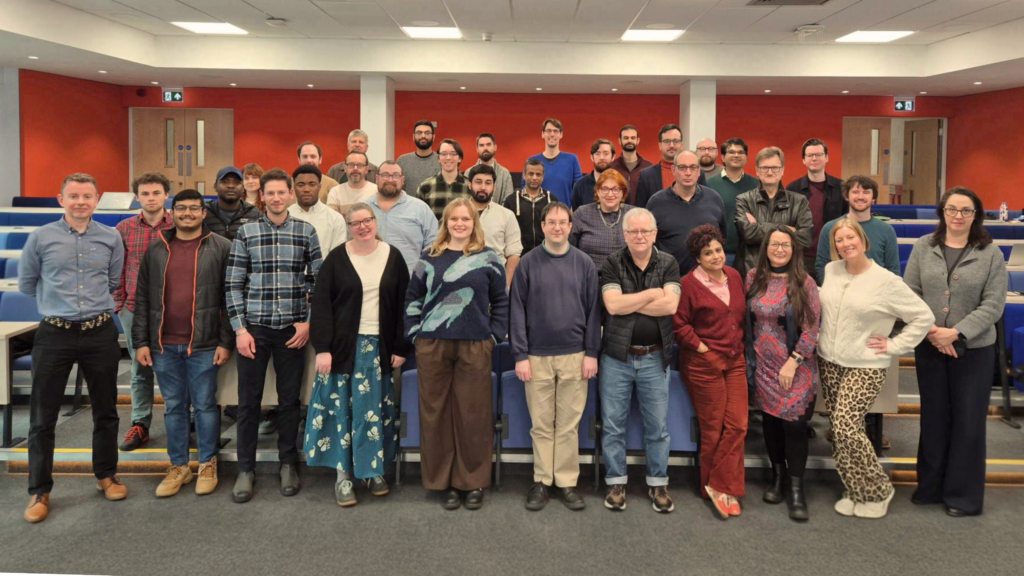
Meet James Buchanan, Head of Plasma Simulation Group at the UK Atomic Energy Authority (UKAEA), who is working as part of our ongoing Fusion Computing Lab collaboration to design fusion energy devices.
As we look to build climate resilience, we need to tackle the environmental challenges around energy production. One day fusion could power our planet with clean, limitless energy using the same process that powers the stars. To make fusion energy possible we need to build a first-of-its-kind machine and to do this we need to be able to model how fusion functions. This requires a deep understanding of plasma conditions, which power fusion reactions. One of the biggest challenges lies in accurately modelling the turbulent movement of plasma, affecting how much energy is produced. As a part of our Fusion Computing Lab collaboration, we are working to find solutions to overcome some of these challenges and help make fusion energy a commercial reality.
The fusion energy device
The most promising fusion energy device design are tokamaks, a doughnut-shaped device that uses magnetic fields to contain and control plasma fuel. The UK’s flagship fusion device, STEP (Spherical Tokamak for Energy Production), aims to deliver electricity to the national grid by 2040. To help bring this vision to life, scientists need to optimise every aspect of fusion modelling, particularly around turbulence in the plasma’s core. Turbulence dynamics affect the confinement of heat and particles, both of which are crucial for achieving the high temperatures and densities needed for sustained fusion reactions.
The computing challenge
The challenge in designing these simulations is that they need to process a vast amount of data and are immensely compute-intensive. Predicting plasma turbulence flow requires detailed calculations that take enormous amounts of time and resources. As a result, while these simulations are accurate, they cannot be routinely used in the integrated workflows needed to model potential plasma scenarios. This limits how effectively scientists can investigate the array of possible plasma configurations, slowing down the design process.
Visualisation of a tokamak, a fusion energy device, modelled by the Hartree Centre Visualisation Team using data from UKAEA
Building surrogate models
To overcome this barrier, we are working to integrate AI and machine learning into the design process by developing surrogate models to help optimise workflows. A surrogate model is designed to mimic the analysis of the original models without running the full set of calculations every time. The surrogate model we built is trained on data from plasma turbulence simulations so that it can reproduce the results of these simulations in a fraction of the time. This approach allows researchers to preserve the benefits of accurate modelling while significantly reducing the time and resources needed.
To build these surrogate models we need to generate large, detailed datasets of turbulence simulations. While creating and training these models is still resource-intensive, once they are built they can be rapidly redeployed across a wide range of simulations, rapidly speeding up and optimising the design process. This breakthrough allows researchers to rapidly evaluate different plasma scenarios and identify previously unreachable high performance configurations. This kind of surrogate modelling represents a significant step forward in the digital-first design of fusion power plants.
Looking forward
Our goal with Fusion Computing Lab is to reduce reliance on expensive real-world prototyping by creating digital twins of fusion devices. These virtual models allow researchers to test new design concepts and configurations in real-time, using the power of AI and supercomputing to simulate how a tokamak will behave under different conditions.
This approach enables scientists and engineers to explore new tokamak designs, understand complex plasma behaviour and fine-tune a tokamak’s performance in a way that is faster, safer and more cost-effective. Ultimately, this brings us closer to building a commercially viable fusion device and helps to unlock a future powered by clean, limitless energy.
Join Newsletter
Provide your details to receive regular updates from the STFC Hartree Centre.