UK–South Africa partnership uses AI to make telescopes smarter
Artificial intelligence is set to transform how South Africa’s leading astronomical observatories operate
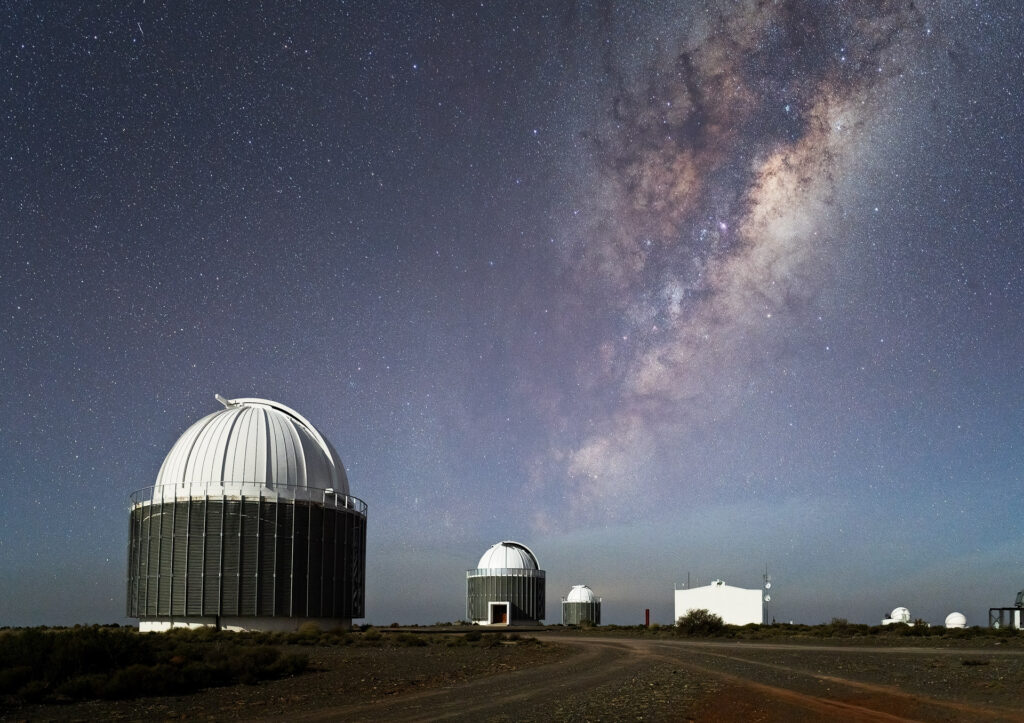
The Science and Technology Facilities Council (STFC) Hartree Centre is working with the South African Astronomical Observatory (SAAO), a leading centre for optical and infrared astronomy, to deliver the ‘Intelligent Observatory’ programme.
The programme is using AI and advanced digital technologies to automate and make telescopes smarter, so they can monitor themselves, process data instantly, and capture sudden astronomical events, like exploding stars, in real time.
Balancing the stars
Running an observatory is a balancing act, and any unexpected events or glitches, from sudden weather changes to equipment faults, can affect the quality of data collected from distant stars and galaxies.
Until now, much of SAAO’s work has relied on small teams manually checking systems and reviewing the data, but as the telescopes open to more astronomers, these processes need to become smoother and more automated.
Visiting astronomers need faster access to manuals, research papers, and maintenance records, while observation and sensor data must be corrected for atmospheric distortions and to anticipate potential faults.
Automating exploration across the universe
Funded through the UKRI International Science Partnership Fund, the Intelligent Observatory unites specialists in AI, software engineering, and telescope operations to meet these challenges.
With AI embedded in daily operations, telescopes can monitor themselves, process data instantly, and produce high-quality datasets, freeing scientists to focus on discoveries across the Universe.
To achieve this, the collaboration is developing:
• a connected system, that monitors instruments and alerts teams to potential faults before downtime occurs.
• automated data-processing tools that convert raw observations into high-quality datasets, corrected for atmospheric interference and instrument imperfections.
• an AI-powered search tool that lets astronomers quickly find and review logs and research papers without manually sifting through documents.
Powering AI for astronomy
Located at STFC’s Daresbury Laboratory, at Sci-Tech Daresbury in the Liverpool City Region, the Hartree Centre is the UK’s leading supercomputing centre dedicated to working with industry and the public sector.
It is home to some of the UK’s most advanced supercomputing experts and technologies, from AI and high performance computing to data analytics.
This international collaboration with SAAO was initiated by AI specialists, Dr Adriano Agnello and Dr Rob Firth at the Hartree Centre, both former astronomers themselves.
Smarter telescopes, faster discoveries
Together, the team is building software that monitors telescopes, spots problems early, and turns raw observation data into clear insights, all with minimal human effort.
It summarises nightly observations, flags system glitches and weather disruptions, and ensures astronomers capture the best possible data.
Meanwhile, advanced AI models also predict local weather, detect faults and adjust for atmospheric effects, keeping telescopes running smoothly and observations reliable.
Dr Adriano Agnello, Senior AI researcher at the Hartree Centre, said:
“It’s incredibly exciting to work with South African Astronomical Observatory on the Intelligent Observatory programme, showing how advanced AI can transform scientific discovery, making telescopes smarter, and enabling astronomers to focus on exploration and breakthrough discoveries. These tools mark a significant step forward in the application of AI to observatory operations, broadening access to major scientific facilities and supporting translational research that can also be applied in industrial settings.”
An ‘AI assistant’ for astronomers
At the same time, the team has built a smart text search platform hosted at the Hartree Centre using Large Language Models (LLMs), to search and interpret technical documents.
It manages AI challenges, reducing incorrect responses, and includes simple feedback interfaces, giving astronomers quick, reliable answers even during busy nights of observing, when finding the right information quickly can be challenging.
In next steps, the team will add documents from the South African Large Telescope (SALT) and apply advanced techniques to make the platform smarter and even more powerful
Broader than astronomy
Beyond astronomy, observatories are perfect testbeds for new technologies that can help industries such as manufacturing, energy, and transport, from smart sensor technologies to predictive maintenance and automated data systems.
By combining cutting-edge AI with world-class observatory expertise, the Intelligent Observatory shows how AI can improve scientific infrastructure, speed up discoveries in astronomy, and inspire innovations that go far beyond the telescope dome.
By lowering barriers to information, these tools also give students, including those at historically disadvantaged institutions, important hands-on experience in AI and data science, helping train the next generation of scientific and technical talent.
A new era of inspiration
Professor Stephen Potter, Head of Astronomy at the South African Astronomical Observatory, said:
“By combining the Hartree Centre’s world-leading expertise in AI and high-performance computing with SAAO’s deep experience in telescope operations, the Intelligent Observatory represents a fundamental shift in how astronomical facilities operate.
“Together, we are embedding advanced AI into the heart of our telescopes and data systems, building observatories that are not just automated, but truly intelligent. This partnership strengthens South Africa’s leadership in innovative astronomy while creating powerful opportunities for students and researchers across Africa to engage with cutting-edge AI-driven science.”
Join Newsletter
Provide your details to receive regular updates from the STFC Hartree Centre.