
Developing sustainable supercomputers with digital twin technology
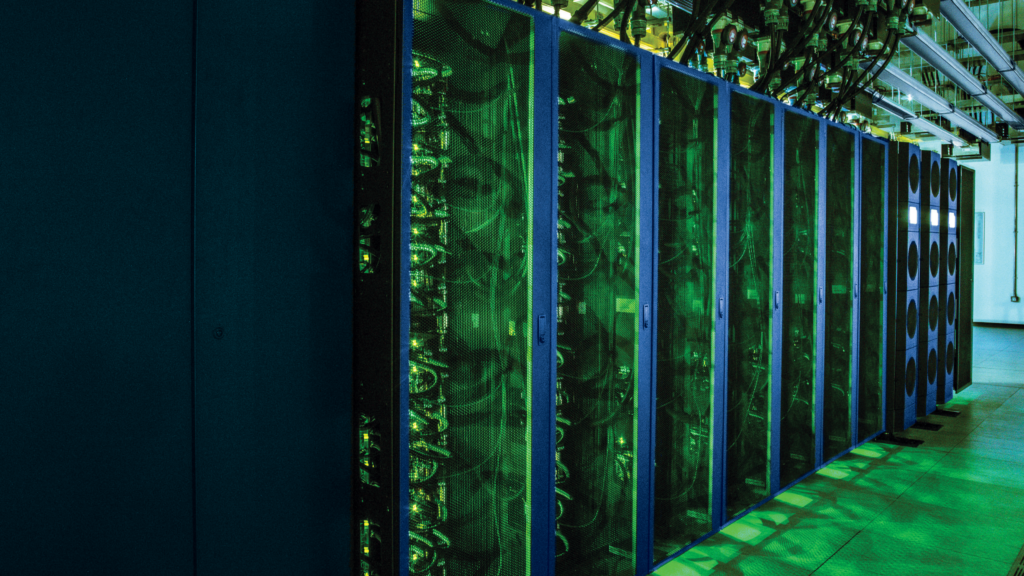
STFC Hartree Centre built a digital twin model of our new supercomputer to improve its energy efficiency, supporting the wider drive toward sustainability and innovation in IT infrastructure.
Challenge
Data centres are critical to the digital economy but are increasingly under pressure to reduce their energy consumption. Managing energy use across complex systems of computing hardware, power infrastructure and environmental controls is a significant challenge. Traditional energy optimisation methods often lack the agility and granularity needed to respond to dynamic workloads and environmental conditions. The goal of this project was to create a proof-of-concept of a digital twin that could simulate and improve energy efficiency in real time, offering both environmental and commercial advantages across the data centre lifecycle.
Approach
Using a combination of environmental data, physical plant information and IT infrastructure inputs, we developed a proof-of-concept digital twin model of a data centre. This model will allow near real-time optimisation by generating customised software and hard-ware configurations for each workload. We developed the model in NVIDIA Omniverse, which is purpose built for digital twins and enables multiuser collaboration, streaming ap-plications directly to users through a webpage. We are also building a monitoring test system for live data, working towards predictive maintenance and a holistic view of the supercomputer and its building, to support a wider STFC asset for more sustainable computing infrastructure. These new capabilities will be integrated into our centres computing and cloud infrastructure as a way to future-proof our compute power.
Benefits
This project lays the groundwork for transformative innovation in sustainable computing infrastructure. By enabling dynamic energy efficiency optimisations, the digital twin model can help technology and manufacturing organisations reduce costs, lower emissions and future-proof their infrastructure. It also positions the Hartree Centre as a leader in applying digital twin methodologies to HPC operations. Beyond environmental impact, the solution presents a compelling case for green technology markets where energy efficiency and carbon reduction are strategic priorities.
Our digital twin gives us a live, holistic view of the supercomputer and the building it sits in, meaning we can tune its performance and energy use, spotting problems before they happen, and build a more sustainable computing future for STFC.
Charles Crooks, Visualisation Software Engineer, Hartree Centre
Join Newsletter
Provide your details to receive regular updates from the STFC Hartree Centre.