
Round Up | Exascale and Scalable AI Workshop 2026
We were delighted to see participants across industry and academia join us for our Exascale and Scalable AI Workshop in collaboration with Lawrence Livermore National Laboratory (LLNL). In this blog, we ask some of the speakers from the event about their thoughts on the workshop and the future of exascale.
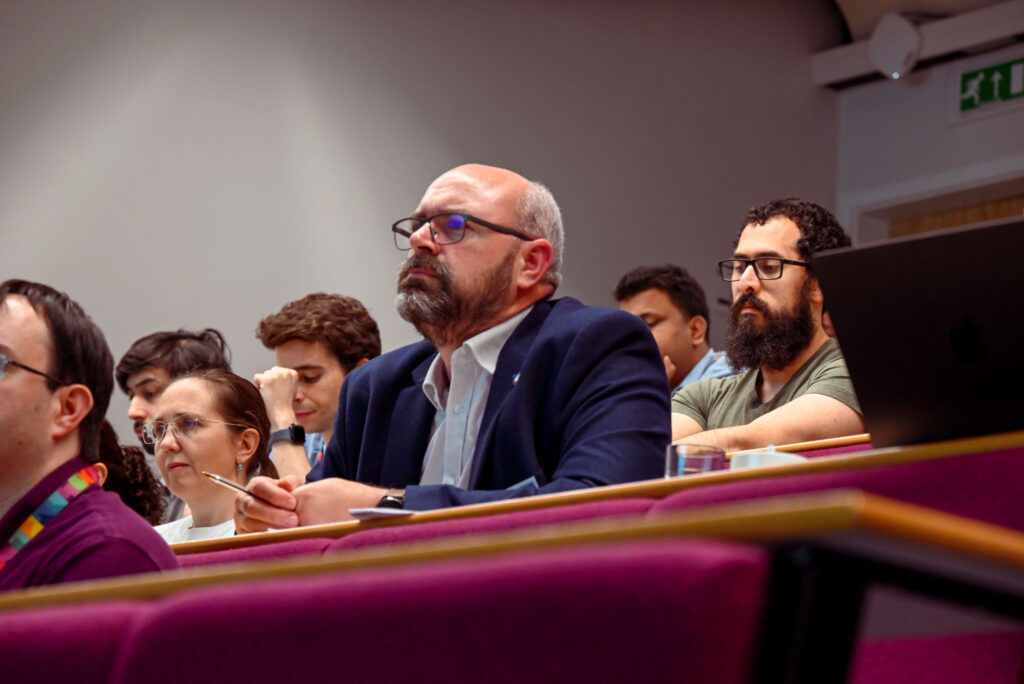
Exascale and Scalable AI Workshop Attendees
Exascale is widely considered to be the future of high performance computing (HPC). Exascale systems can process information at a greater speed than most modern-day supercomputers, with the potential to solve some of society’s biggest challenges. By enabling us to run large scale simulations, exascale can support the development of fusion energy, revolutionise material research and accelerate drug discovery by reducing research timelines. Our recent workshop provides a step toward UK industry developing its understanding of exascale, inviting public and private sector professionals to speak about their research and share lessons learnt. Through these conversations, we aim to create starting points for new collaborations which will one day solve grand challenges within exascale computing.
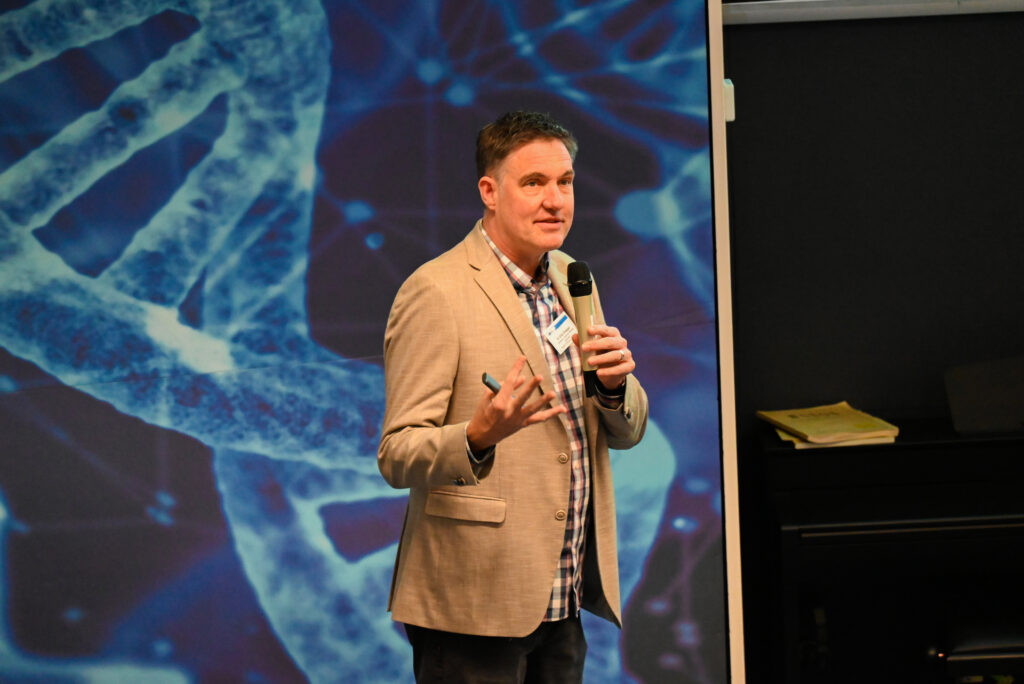
“This was a very successful and timely workshop. Researchers in both the US and UK are facing very similar challenges in terms of integrating new AI capabilities into their work; sharing our experiences is quite valuable in ensuring we maintain scientific rigor during a period of rapid change. I am particularly impressed with the forward-looking vision the UK is demonstrating as they arm their researchers with the latest technology and work with them to adopt them as a community.”
– Eric W. Draeger, Lawrence Livermore National Laboratory, United States
When we bring together countries like the UK and USA, it is a highlight to see how our shared ambitions to tackle real-world challenges are shaping global climate resilience strategies such as meeting Net Zero targets by 2050. One of the ways both countries are aiming to achieve this, is by leading the way in the development, adoption and responsible use of advanced digital technologies and applying this to energy efficiency challenges. At the Hartree Centre, this means collaborating with public sector organisations like the UK Atomic Energy Authority (UKAEA) on extreme-scale computing to accelerate innovation in fusion energy. We are developing digital twin technology which is enabling engineers to design a tokomak fusion reactor, supporting national goals to produce zero carbon electricity.
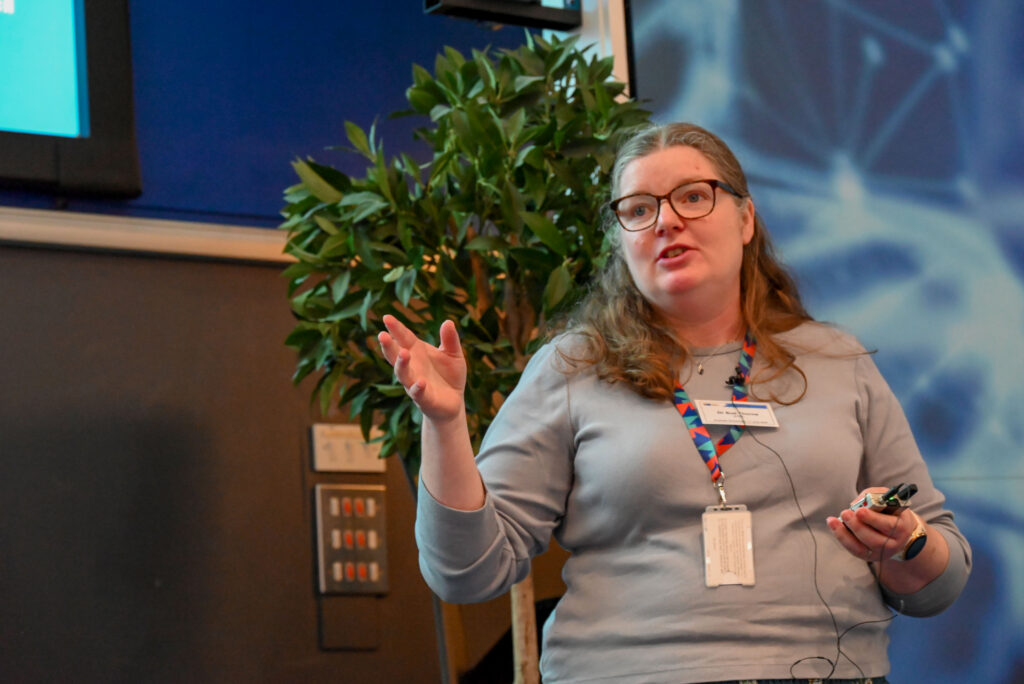
In healthcare, Sue Thorne, High Performance Software Engineering Team Lead at the Hartree Centre, shared a recent successful project she worked on for Alder Hey Children’s Hospital. In this project the team discovered that senior clinicians were spending large amounts of clinical time managing staff rotas, often leading to unfair outcomes and workplace conflicts. In collaboration with IBM, our team developed an intelligent scheduling tool that automatically generates fair rotas. This supports staff needs, improving wellbeing and freeing up time for patient care. Projects like this demonstrate to the research community what could be achieved through exascale computing.
“Our annual workshop with the US National Laboratories is always a very inspiring event and a highlight of the year for me. The speakers are all demonstrating how quickly the computing and artificial intelligence communities are making further significant positive impacts for industrial and public sector organisations across a wide range of sectors, which will benefit society as a whole. By bringing the UK and US together, we accelerate our advances and we also really enjoy collaborating together!”
– Sue Thorne, STFC Hartree Centre, United Kingdom
Principal AI Researcher Adriano Agnello then shared his excitement about a project with the South African Astronomical Observatory, where the Hartree Centre team is supporting with instrument and engineering operations through AI anomaly detection. The international project aims to co-develop an approach with the facility operators, where knowledge data and engineering can coexist at scale.
After two days at the Exascale and Scalable AI Workshop, we all headed home with much to think about. From how exascale computing could create massive changes across many sectors to how strengthening international relationships accelerates growth and fosters collaboration, our team really appreciated the insights shared by all the speakers and we look forward to seeing everyone again next year!
Join Newsletter
Provide your details to receive regular updates from the STFC Hartree Centre.